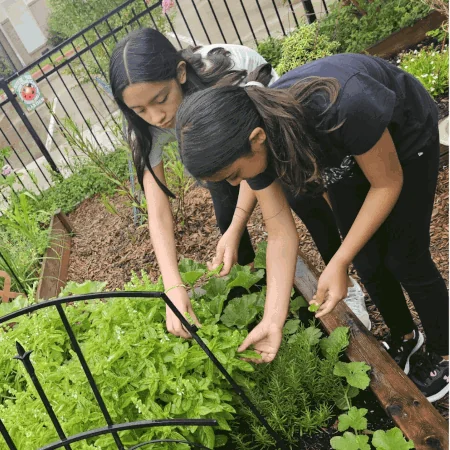
 To deepen students’ connection to the natural world, the Montessori elementary program extends learning beyond the classroom through meaningful, hands-on experiences in nature, offering opportunities that cannot be replicated indoors. This emphasis on experiential, holistic education supports students’ academic, social, and personal growth while fostering curiosity and respect for the environment.
Upper Elementary students further enrich this learning through an annual five-day trip to Nature’s Classroom Institute in New Ulm. During this immersive experience, students explore ecosystems, engage in scientific discovery, and collaborate closely with peers and teachers. The program features active, hands-on lessons, including group challenges that build confidence, historical simulations, and environmental studies. Living and learning together in a natural setting helps students develop a strong sense of community, greater self-confidence, and a deeper appreciation for the world around them.
Cosmic Education is introduced through Five Great Lessons, an important and unique part of the Montessori education. The goal is to foster a meaningful understanding how subject matters and topics are interconnected and encourage the development of a whole individual.
The lessons are broad foundation for future study. They are designed to inspire their wonder for creation, appreciate the inventiveness and innovation of the human spirit, and spark their imagination and curiosity with new ideas.
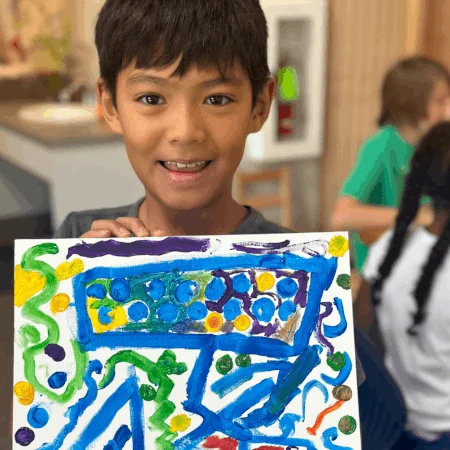
Montessori elementary classrooms for ages 6 to 12 are intentionally designed to foster independence, critical thinking, and confidence. Within a thoughtfully prepared environment, students are encouraged to take ownership of their learning, make purposeful choices, collaborate with peers, and develop a strong sense of responsibility to both their work and their classroom community.
Through extended, uninterrupted work periods and hands-on, inquiry-based materials, students build focus, persistence, and a deep sense of accomplishment. As they explore complex concepts across subjects, they strengthen their ability to think critically, solve problems, and make meaningful connections. Families often observe growing confidence, self-discipline, and resilience as students learn to manage their time, work through challenges, and support one another.
These essential skills extend well beyond the classroom, equipping students for continued academic success, positive relationships, and thoughtful engagement with the world around them.
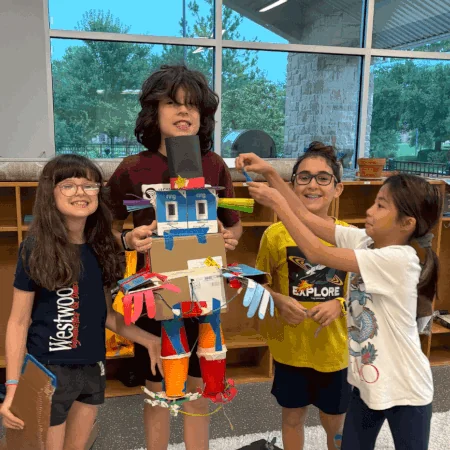 Our primary goal for students ages 6 to 12 is to foster independence, responsibility, and a strong sense of purpose as learners and community members. At this stage, growing autonomy helps students develop confidence, take ownership of their work, and recognize their role within a larger social environment. As they engage with meaningful academic challenges and real-world concepts, they learn to manage their time, make thoughtful choices, and contribute positively to their classroom community. Our carefully prepared environments support their expanding curiosity and reasoning abilities, encouraging exploration, problem-solving, and sustained, self-directed learning.
We also place a strong emphasis on social and emotional development during the elementary years. Our classrooms provide a respectful and supportive environment where students learn to navigate relationships, communicate effectively, and consider multiple perspectives. Through collaborative work, open discussion, and uninterrupted work periods, students develop concentration, self-discipline, and accountability. With this foundation, they grow into thoughtful, confident individuals who are capable of working both independently and cooperatively within their community.
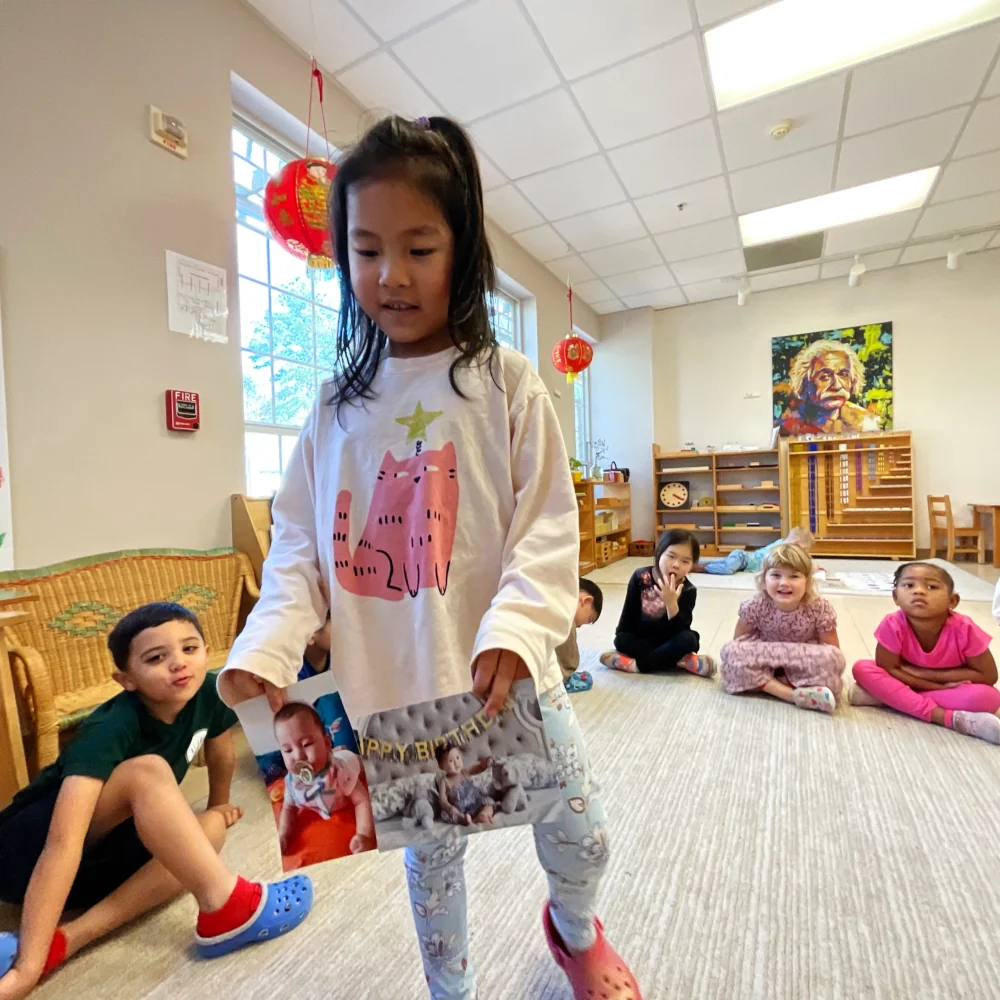
Our Montessori elementary program for students ages 6 to 12 is designed to foster independence, responsibility, and a strong sense of purpose. During these years, students develop greater autonomy as they take ownership of their learning, build confidence, and understand their role within a larger community. Through meaningful academic work and exploration of real-world concepts, they learn to manage their time, make thoughtful decisions, and contribute in purposeful ways. Our carefully prepared classrooms support their growing curiosity and reasoning skills, encouraging exploration, problem-solving, and sustained, self-directed learning.
We also emphasize social and emotional growth as a central part of the elementary experience. In a respectful and collaborative environment, students learn to navigate relationships, communicate effectively, and consider diverse perspectives. Through group work, discussion, and uninterrupted work periods, they strengthen concentration, self-discipline, and accountability. This strong foundation helps students grow into confident, thoughtful individuals who can work independently and contribute positively to their community.
 Families seeking private education often prioritize quality and accountability when choosing a school. Many Montessori schools demonstrate their commitment to excellence by pursuing accreditation through respected organizations such as the American Montessori Society and the Association Montessori Internationale. These accrediting bodies uphold clear standards designed to preserve the integrity and authenticity of Montessori education.
Accreditation helps ensure that teachers are specially trained in Montessori methodology, classrooms faithfully follow authentic Montessori principles, and schools meet rigorous standards of excellence. For parents, this provides meaningful reassurance that their investment supports a true Montessori education rooted in proven practices and high expectations, rather than a program that simply uses the Montessori name.
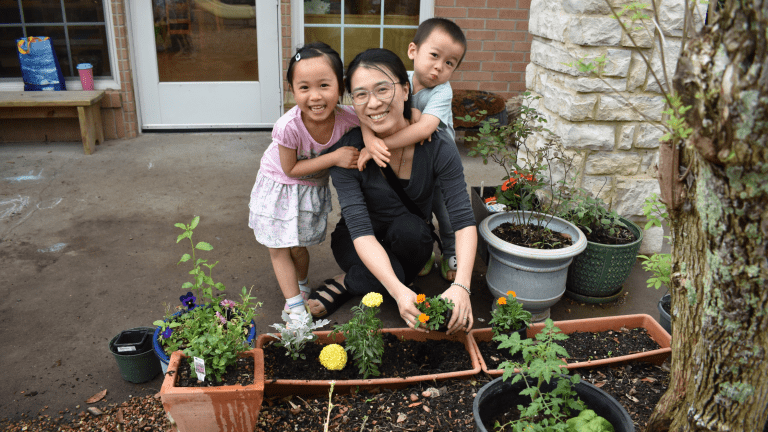
Growing More Than Plants: Gardening at Montessori House
The holidays offer family time, celebrations, late nights, travel, and lots of stimulation. When January arrives, many children struggle to settle back into school routines.