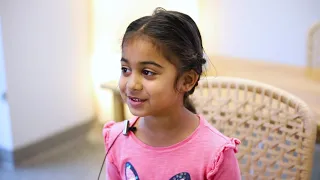

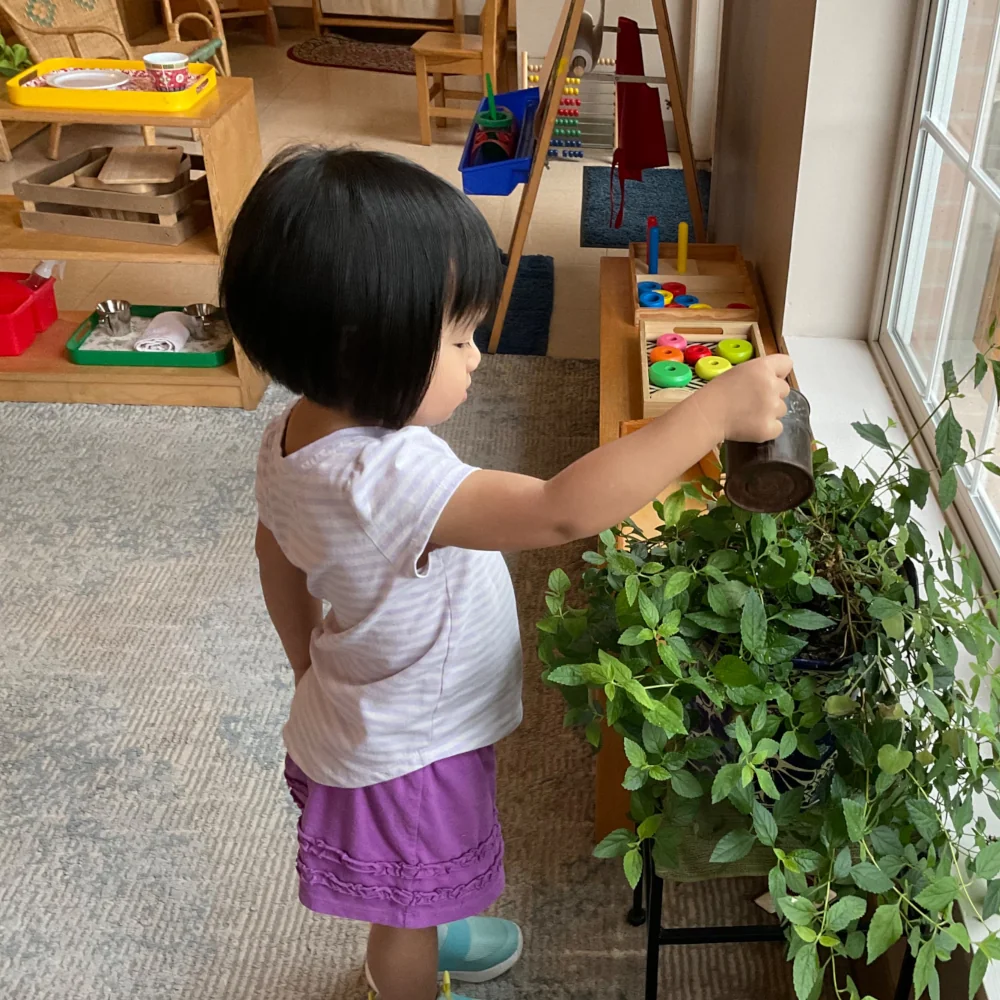
Maria Montessori developed Montessori education around the belief that each child follows a unique developmental path and should be supported accordingly. Rather than following a rigid, one-size-fits-all curriculum, children progress at their own pace, allowing them to fully understand concepts before moving forward. In our Early Childhood classrooms, children choose purposeful work that matches their readiness and interests while exploring language, mathematics, sensorial materials, and cultural studies through hands-on learning. This approach fosters independence, concentration, and intrinsic motivation.
Credentialed and experienced Montessori Guides provide individualized guidance, carefully observing and supporting each child’s development. In our mixed-age classroom, younger children learn from older peers while older children strengthen their knowledge through leadership and mentorship. Families value this personalized approach because children are neither rushed ahead prematurely nor held back. Instead, they experience a balanced, confident, and joyful learning journey tailored to who they are and how they learn best.
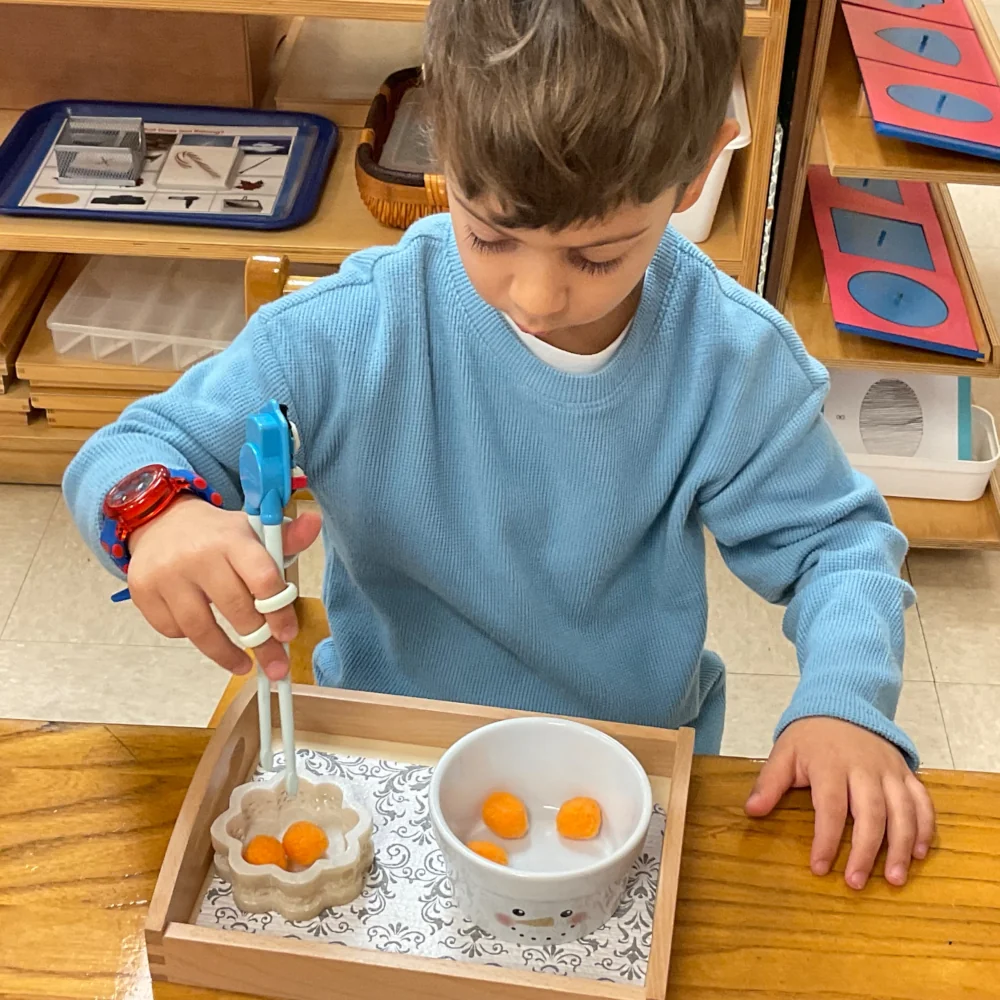
Montessori early childhood classrooms for ages three to six are intentionally structured to foster independence, concentration, and confidence. Within a thoughtfully prepared environment, children are encouraged to make purposeful choices, solve problems independently, care for themselves and their classroom community, and take increasing responsibility for their own learning.
Through uninterrupted work periods and hands-on materials, children develop focus, persistence, and a deep sense of accomplishment. As a result, families often notice growing confidence, self-discipline, and resilience. Children begin to trust their own abilities, approach challenges with a growth mindset, collaborate with peers, and develop perseverance when tasks feel difficult.
These important skills extend far beyond the classroom, supporting success in academics, relationships, and everyday life.
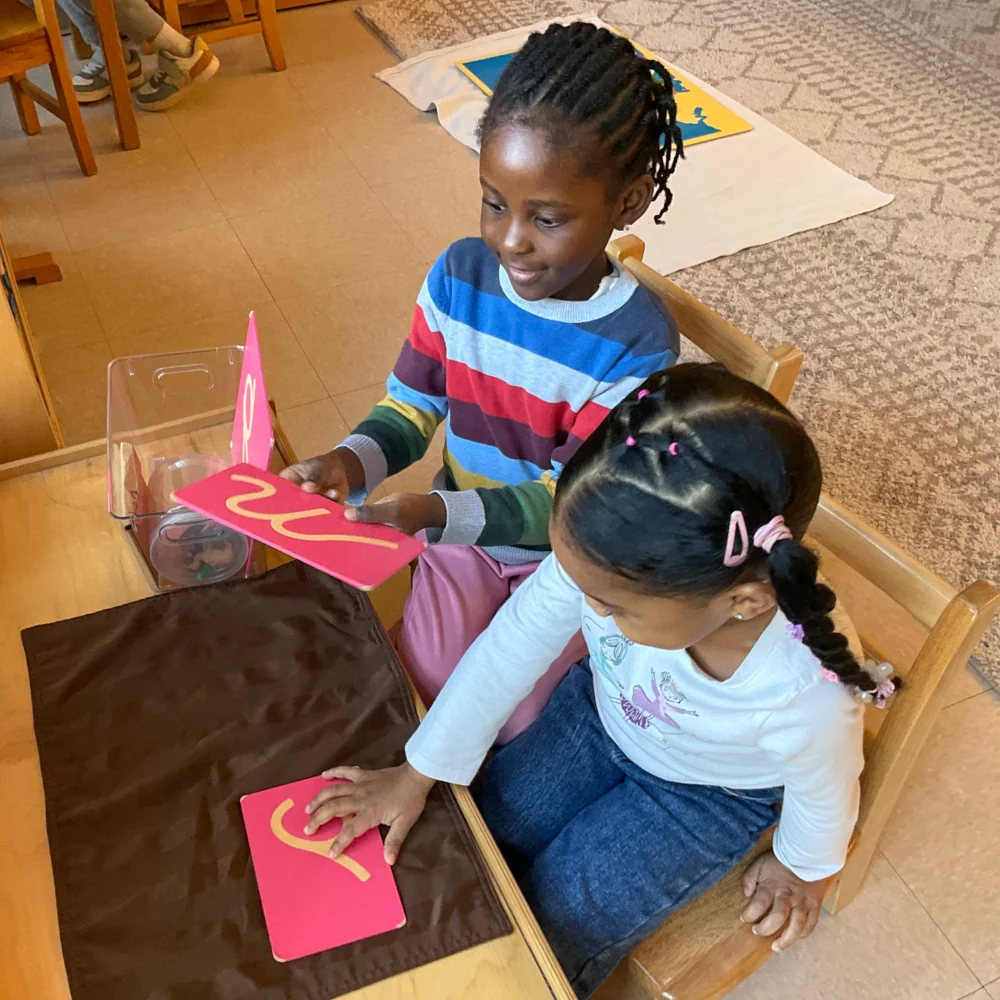
Our primary goal for children ages three to six is to nurture independence and cultivate the ability to care for themselves, others, and their environment. At this stage, growing independence builds a strong sense of belonging, encourages purpose, and fosters ownership of learning. As children master meaningful tasks and responsibilities, they gain confidence and begin to see themselves as capable contributors within their classroom community. We thoughtfully prepare spaces that support their natural curiosity and love of discovery, allowing them to make choices, solve problems, and engage in focused, self-directed work.
We also prioritize emotional and social development during these formative years. Our classrooms provide an emotionally safe environment where feelings are acknowledged and respected as part of learning to understand ourselves and others. By protecting uninterrupted work periods and creating a calm, purposeful atmosphere, children develop concentration, self-regulation, and respect for shared spaces. With this foundation, children learn to work both independently and collaboratively, growing into confident, compassionate members of their community.
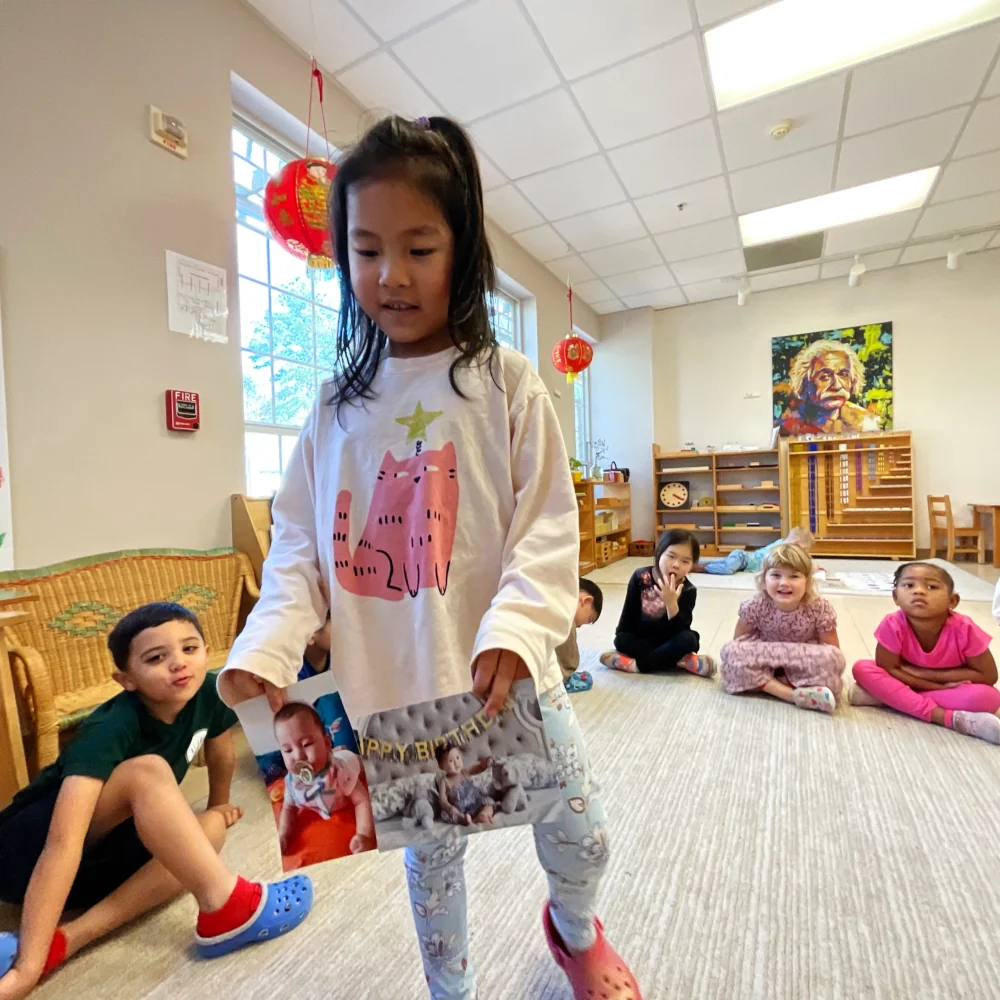
Montessori classrooms are designed with mixed-age groupings that typically span three years, such as ages 3 to 6. This structure creates a natural learning community where children grow together over time. Older students have meaningful opportunities to develop leadership and confidence by guiding and modeling skills for younger classmates, while younger children benefit from observing and learning from more experienced peers.
The classroom environment encourages cooperation rather than competition, helping children feel secure, capable, and valued within their community. As children spend several years together, strong relationships develop and a culture of mutual respect emerges.
Through daily interactions and shared work, children develop respectful communication, empathy, and a growing sense of responsibility for themselves and others. Working alongside peers of different ages strengthens patience, confidence, and collaboration. Many families are drawn to Montessori because this multi-age community supports both academic growth and the development of lasting social and emotional skills.
 Families seeking private education often prioritize quality and accountability when choosing a school. Many Montessori schools demonstrate their commitment to excellence by pursuing accreditation through respected organizations such as the American Montessori Society and the Association Montessori Internationale. These accrediting bodies uphold clear standards designed to preserve the integrity and authenticity of Montessori education.
Accreditation helps ensure that teachers are specially trained in Montessori methodology, classrooms faithfully follow authentic Montessori principles, and schools meet rigorous standards of excellence. For parents, this provides meaningful reassurance that their investment supports a true Montessori education rooted in proven practices and high expectations, rather than a program that simply uses the Montessori name.
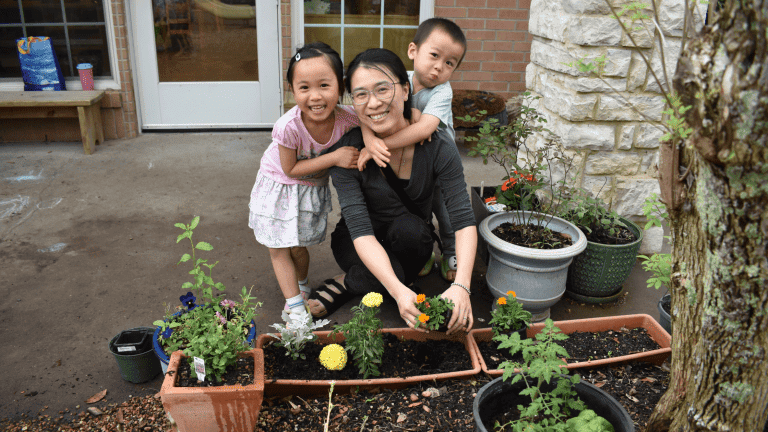
Growing More Than Plants: Gardening at Montessori House
The holidays offer family time, celebrations, late nights, travel, and lots of stimulation. When January arrives, many children struggle to settle back into school routines.