
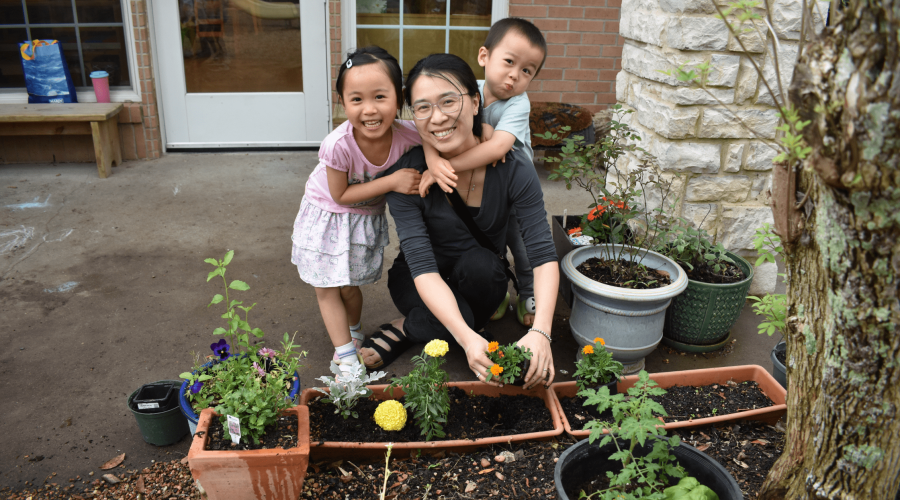
There’s something quietly magical about watching a child tend to a plant. The careful watering, the daily checking, the absolute delight when something green pushes up through the soil, gardening connects children to the natural world in a way that no worksheet or lesson plan ever could.
At Montessori House for Children and Elementary School, gardening isn’t an occasional activity, it’s woven into the rhythm of school life. And the benefits go far deeper than you might expect.
Why Gardening Matters for Young Children
They learn where food actually comes from. In a world of grocery store shelves and packaged snacks, gardening gives children a direct, tangible connection to food sources. When a child grows a tomato, they understand food in a completely different way, and they’re far more likely to eat it.
They begin to understand the natural world. Gardening introduces children to the food chain, ecosystems, seasons, and the role plants play in sustaining life. These are big concepts, but children absorb them naturally when they’re living them.
They develop real responsibility. Plants need consistent care. Watering, weeding, observing: these tasks teach children that their actions have real consequences, and that living things depend on them. That’s a powerful lesson at any age.
They get moving and thriving. Time outdoors in the garden supports physical health, reduces stress and anxiety, and builds both gross and fine motor skills. Digging, planting, and harvesting all require coordination, strength, and focus.
They fall in love with nature. Perhaps most importantly, children who garden develop a deep and lasting appreciation for the natural world. That connection stays with them for life.
Gardening and the Five Senses
One of the most beautiful things about a garden is how fully it engages the whole child. At Montessori House, our students explore their garden with all five senses every single day:
● Touch — soil, bark, leaves, seeds, the roughness of a stem or the smoothness of a petal
● Smell — everything from fragrant herbs to rich, earthy compost
● Taste — fruits and vegetables they’ve grown themselves, from sweet to tangy to surprising
● Sight — the colors, shapes, and textures of a living, changing garden
● Sound — rustling leaves, buzzing pollinators, the crunch of gravel underfoot
This multisensory experience isn’t incidental, it’s deeply intentional. Sensory engagement is foundational to how young children learn and process the world around them.
Getting Started at Home
Inspired to bring a little gardening into your own backyard? Here are a few tips to get started:
Start small. A single container or a one-foot garden bed is plenty. Success builds confidence, and confidence grows curiosity.
Prioritize safety. Choose child-sized tools, non-toxic plants, and a space that allows for independent exploration without hazards.
Let them lead. Resist the urge to fix or perfect. A slightly lopsided seedling planted by small hands is worth more than a perfectly tended row.
Add books and journaling. Garden-themed books and simple drawing journals help children connect language and literacy to what they’re experiencing outside.
Tap into local resources. The Fort Bend Master Gardeners (fbmg.org) and Junior Master Gardener programs are excellent local resources for families in the Richmond and Katy area.
Gardening the Montessori Way
At Montessori House, our school gardens are a living extension of the classroom. Students across all levels, from toddlers to elementary, have opportunities to plant, observe, harvest, and care for our outdoor spaces throughout the year. It’s one of the things that makes our campus truly special.
Curious about what a day at Montessori House looks like? We’d love to show you. Schedule a tour at mhfcschools.com or call us at 281-239-3400.